Little Muddy Project Information
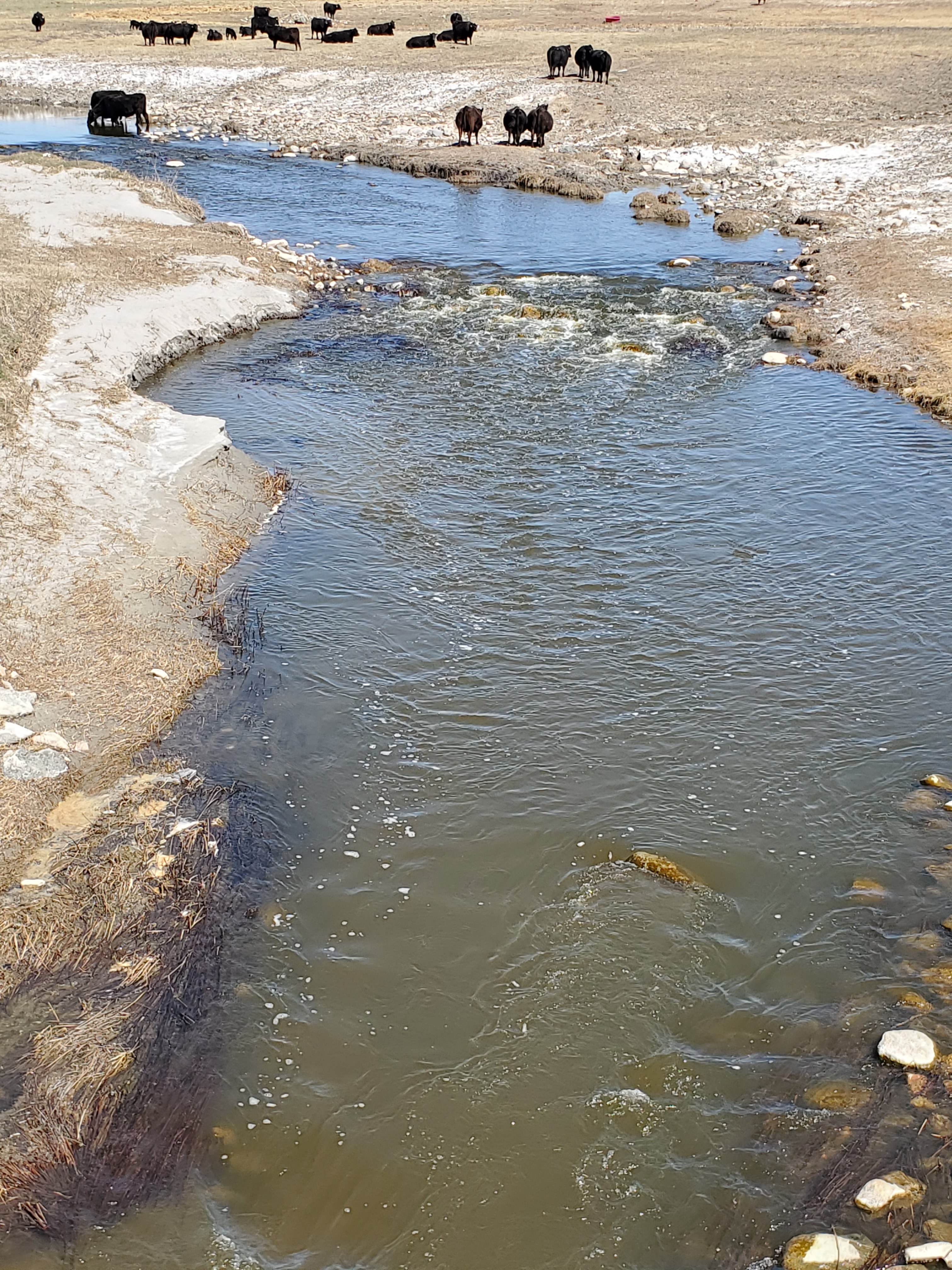
The Williams County SCD has been granted a portion of a settlement from a produced water spill that occurred in 2014. This spill released 29 million gallons of contaminated water from fracking into the Little Muddy River Watershed, resulting in harm to recreation, water quality, and aquatic habitats and wildlife. The Little Muddy Watershed exists largely within Williams County, with the river flowing south to join with the Missouri River. Several tributaries drain into the river. Existing water quality concerns include E. coli, which is a threat to human health and recreation.
In partnership with the North Dakota Department of Environmental Quality, this program will cost-share conservation projects within this watershed that will improve water quality and ecological function within the watershed. It will be supplemented by EPA 319 program dollars in future years of the ten-year program. Program dollars may also be supplemented with other, non-federal funding sources.
We are also implementing a water testing program within the watershed to assess the current water quality and ecological function of the river system, as well as the impact of implemented best management practices (BMPs).
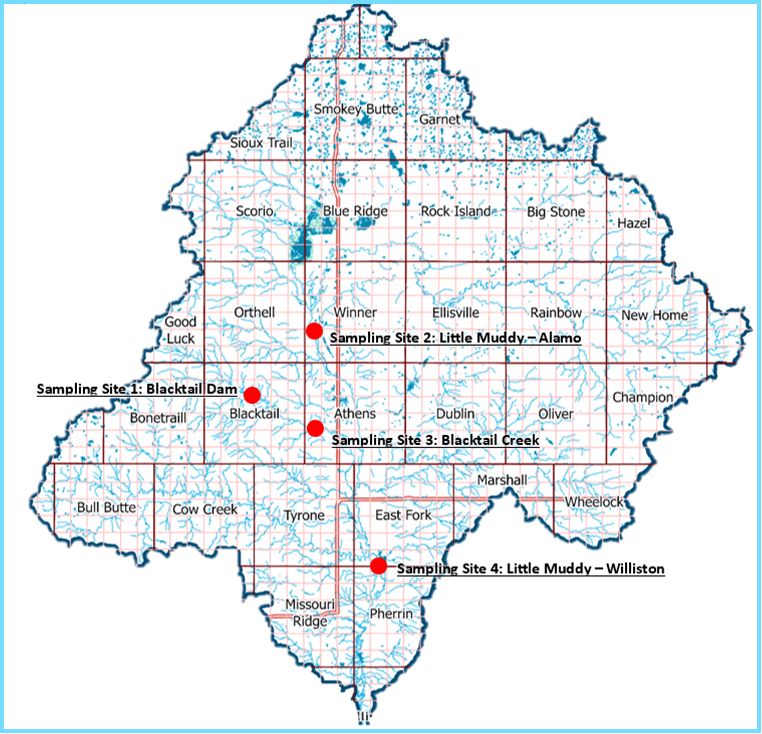
Our results indicate areas of good water quality and areas that need improvement. Two of our stream sites have stable or decreasing parameters, which is what we want to see. Our third stream site has problems with E. coli and excess nutrients; Blacktail Dam has issues with nutrients that contribute to the minor algal blooms present during the warmer months. BMPs that may help with these issues include vegetative buffers, grass seedings, cover crops, rotational grazing plans, water development, manure management systems, and fencing.
The map below shows the boundaries of the watershed. Anyone who owns or operates land inside this boundary is potentially eligible for cost share assistance from this program at a 70/30 rate. Applications are accepted on a rolling basis and are reviewed by our board. There is no deadline to apply.
*Due to the size and expense of these practices, payment is limited to 640 acres or less and for no more than three years, cumulatively
Examples of projects that may be eligible for funding include:
- Grass seedings (pasture/hayland/rangeland)
- Salinity/sodic soil management
- Grassed waterways
- Cover crops*
- Filter/buffer strips
- Field borders
- Tree plantings for:
- Agricultural fields
- New animal feeding operations
- Riparian areas
- Wetland restorations
- Manure management systems
- Wildlife/pollinator plantings
- Water development
- Tanks
- Solar pumps
- Shallow pipelines
- Fencing
- Rotational grazing plans and incentives*
- Soil health assessments
- Advanced precision nutrient management*
Additional Outside Sources
Further information about the initial spill: Pipeline Company to Pay $35 Million in Criminal Fines and Civil Penalties for Largest-Ever Inland Spill of Produced Water from Oil Drilling | OPA | Department of Justice
Water quality parameter factsheets form the EPA: Factsheets on Water Quality Parameters | US EPA
Water quality data for North Dakota surface waters: NDDoh Surface Water Viewer
Information on the EPA’s 319 grant program: 319 Grant Program for States and Territories | US EPA
Information on stream and river ecology: Rivers and Streams: Life in Flowing Water | Learn Science at Scitable (nature.com)
North Dakota native grassland plants: Prairie Wildflowers and Grasses of North Dakota | North Dakota Game and Fish
North Dakota threatened and endangered species: Threatened and Endangered Species | North Dakota Game and Fish
 Williams County Soil Conservation District