Introduction to Blacktail
Blacktail Dam is a 155 acre recreational reservoir in Williams County, North Dakota. The Dam has a singular boat landing on the south side and is heavily bordered by homes and camping areas. The Blacktail Dam watershed is a nearly 17,500 acre drainage basin consisting primarily of agricultural fields and native grassland/pasture. The monitoring of water quality in Blacktail Dam is essential to ensure the safety of individuals utilizing the waterbody for recreation and its ability to support various fish and wildlife species.
Preliminary Water Testing
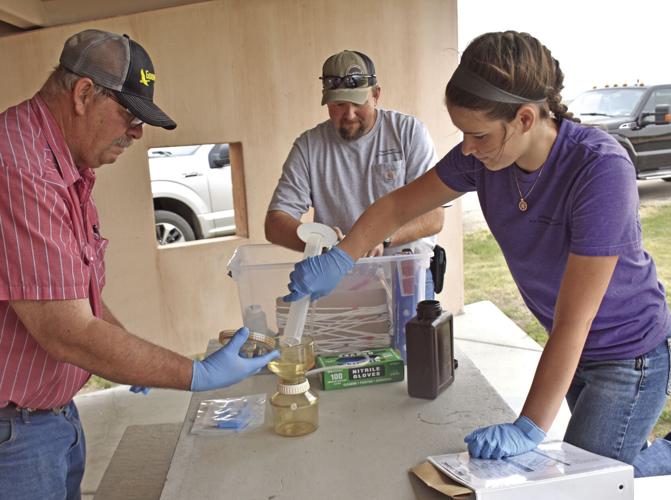
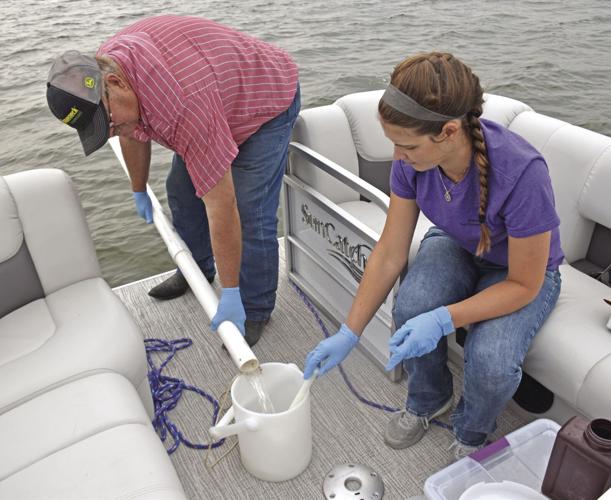
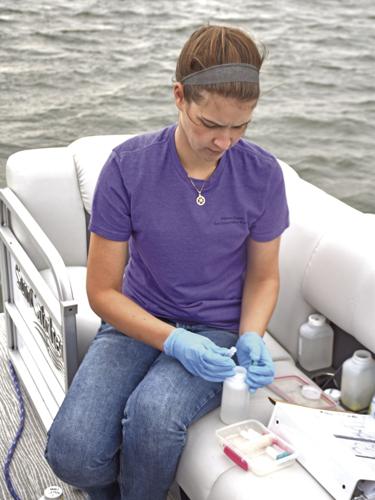
As many of you might have seen through our Facebook page, as well as the Williston Herald, the District has been collecting water samples on Blacktail Dam for the past 2 years. These samples, look at the levels of nitrogen, phosphates, and bacteria in the water. Samples are collected bi-monthly and then sent to the Bismarck lab. The Grant for this project ends in September of this year and results will hopefully become available at the start of the next year. For more information checkout the article.
***Photo credits: Mitch Melberg from the Williston Herald***
Results
Little Muddy
Watershed Program Update
Our water sampling efforts have concluded for 2023, and we now have enough data to start looking at the health of the watershed. For the Little Muddy program, we sampled Blacktail Dam and three stream sites, and we’ve also been helping the Williston Parks and Recreation District on Epping-Springbrook Dam. Blacktail Dam was tested for metals, nutrients, conductivity, suspended solids, and chlorophyll; the streams were tested for nutrients, suspended solids, and E. coli. For Blacktail Dam the metals were very low and chlorophyll – a measure of algae in the water – was comparable with past years. Certain nutrients were high, which can contribute to algae blooms, especially when combined with summer heat. Suspended solids were also high, which can impact fish health, aquatic plant health, and negatively influence other parameters.
Stream results were largely acceptable except for Blacktail Creek. This site demonstrated increasing trends for most parameters, which can mean declining aquatic habitat quality and can impact water quality in the main channel of the river. We also saw spikes in many results early in the season. Even if trends are positive overall, these spikes can still put pressure on aquatic wildlife and recreation. Macroinvertebrate sampling – surveys for aquatic insect larvae – were also conducted and will give us a holistic measurement of water quality health when we receive the results in 2024. For more information on water quality parameters, the EPA’s Factsheets on Water Quality Parameters can be found online and are helpful and informative.
 Williams County Soil Conservation District